
Singapore’s growing reputation as a global biomedical and life sciences hub has received another international boost, with the A*STAR Infectious Diseases Labs (A*STAR IDL) earning a 2026 Design Excellence Award at the Lab Design Conference in Orlando, Florida.
Designed by HKS Singapore in collaboration with FOMA Architects LLP and EWC Engineers, the project was recognised for its innovative approach to high-containment laboratory planning, integrating biosafety, operational efficiency, sustainability and researcher wellbeing within a active infectious disease research environment.
Established in 2021 in response to the COVID pandemic, the A*STAR IDL was created to strengthen Singapore’s pandemic preparedness capabilities and support advanced infectious disease research. The facility consolidates multidisciplinary teams working across innovations in infectious biology, translational research and vaccine development into a unified research environment designed to adapt to evolving scientific and biosafety needs.
Designing for Pandemic Preparedness
The laboratory renovation transformed a fragmented facility into a future-ready bio-safety level 2 research hub while maintaining continuous operations throughout construction.
The existing facility was fragmented across various building and levels in Biopolis @ one-north development. These specialised laboratory functions need to be consolidated to function as a single unit. A*STAR IDL was given a vacated 3,000sqm laboratories that have a fundamental zoning issue.
The existing laboratory function was occupying the center of the floorplate sandwiched by two writing space areas. Staff were required to walk through laboratory areas to access workspaces and pantry, creating safety issues, inefficiencies in circulation and compromising biosafety operation.
The redesign established a clear separation between office and laboratory functions. Office spaces were consolidated into a cohesive workplace environment located closer to building access points, while laboratory suites were relocated deeper within the floorplate to align with containment hierarchies and scientific workflows.
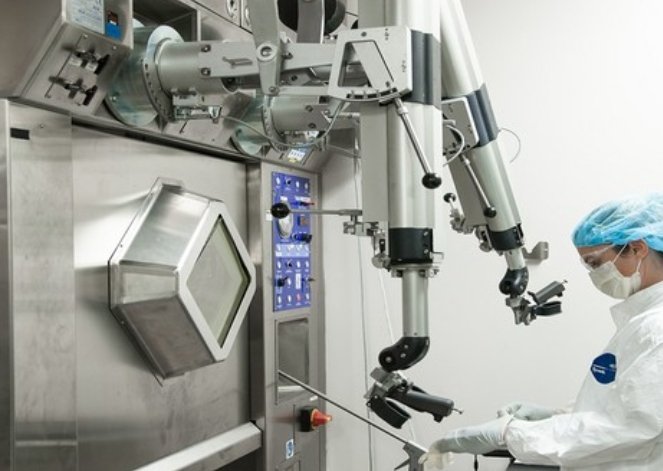
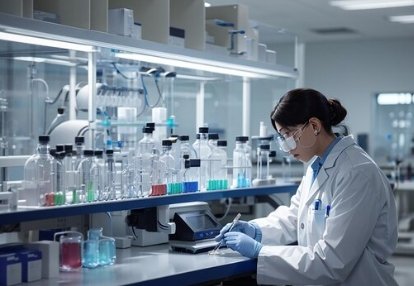
The upgraded facility now includes a BSL2-e suite supporting vaccine development, dedicated tissue culture suites, microscopy rooms, zebrafish and mosquito laboratories, and flexible research environments capable of adapting to evolving scientific requirements.
Human-Centered Design in High-Containment Environments
While biosafety laboratories are typically associated with technical infrastructure and engineering systems, the A*STAR IDL project placed equal emphasis on the experience of the researchers using the space.
The design team applied a human-centered design framework built around three core principles: Spatial Logic, Sensory Ergonomics and Restorative Design.
Spatial Logic focused on reducing cognitive load through clearer zoning, intuitive navigation and improved workflow organization. To support orientation within the open laboratory environment, different laboratory sections were assigned distinct color identities and numbered bench islands. Emergency egress paths and safety equipment zones were highlighted using a recognizable “Safe Zone” concept, helping researchers quickly identify emergency infrastructure during high-stress situations.
Secondly, Sensory Ergonomics addressed environmental quality through upgrades to lighting, acoustics and thermal stability. Existing fluorescent lighting systems were replaced with low-wattage LED fixtures positioned perpendicular to laboratory benches to improve visibility and reduce glare and shadowing.
The project also included a complete modernisation of ageing air-handling systems and integration of a new building management system capable of monitoring pressure differentials across containment spaces in real time. Additional interventions addressed long-standing humidity and thermal bridging issues common in Singapore’s tropical climate.
The third principle, Restorative Design, focused on supporting mental wellbeing and collaboration. Centralized social spaces, meeting pods, focus rooms and biophilic elements were incorporated to encourage informal interaction and provide opportunities for decompression from the intensity of containment-based research work.
Natural light access and greenery were also prioritised wherever possible, challenging the assumption that biosafety laboratories must remain disconnected from daylight and restorative environments.
Measurable Outcomes Beyond Compliance
A post-occupancy evaluation conducted after completion provided measurable insight into how the upgraded environment performed from the users’ perspective.
The survey, completed by 72 staff members, found that safety-related categories received the highest satisfaction scores across the facility. More than 90 percent of respondents expressed satisfaction with the separation between laboratory and office zones, overall facility safety and the placement of safety infrastructure.
For HKS Singapore, the project also represents the firm’s first laboratory-focused impact assessment in the region and contributes to its broader research-driven design approach focused on cognitive wellbeing and brain-healthy workplaces.
Supporting Singapore’s Biomedical Ecosystem
The international recognition of the A*STAR IDL project arrives at a significant moment for Singapore’s biomedical sector.
Singapore continues to strengthen its position as a leading destination for biomedical manufacturing, translational research and biotechnology innovation through sustained investment in research infrastructure, talent development and public-private collaboration.
Research institutes play an important role within this ecosystem, not only by supporting scientific discovery but also by enabling faster responses to emerging infectious diseases and future public health threats.
The project also highlights how laboratory environments are evolving beyond purely technical facilities into strategic assets that influence recruitment, collaboration, innovation and long-term organisational resilience.
As global demand grows for more adaptable and resilient research infrastructure, the A*STAR IDL project offers a regional example of how advanced biosafety facilities can successfully integrate human-centered design, operational performance and future readiness within a highly regulated scientific environment.