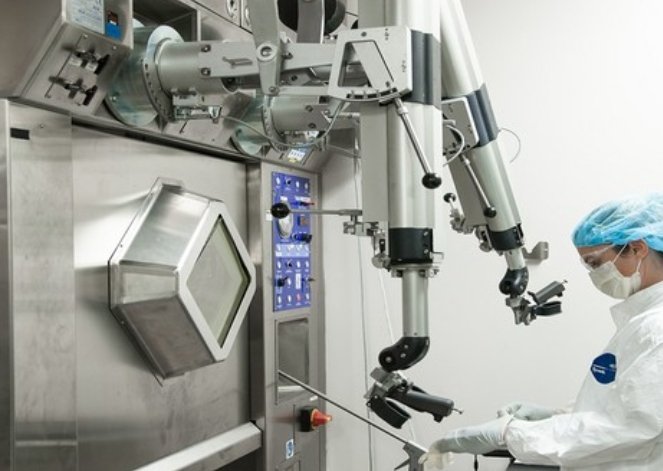

image credit- shutterstock
The rise of advanced therapies is fundamentally reshaping the contract manufacturing landscape, pushing CDMOs to evolve beyond traditional manufacturing roles. The advanced therapy medicinal products (ATMP) pipeline currently includes over 4,400 active programmes globally, with APAC contributing nearly 50 per cent of the activity. As these therapies progress, manufacturing complexity is increasing, requiring specialised facilities, advanced technologies, and highly customised production systems.
The economic burden of drug development further intensifies these challenges. According to McKinsey, the average cost of developing a new drug reached $2.3 billion in 2022, while spending on Contract Research Organisations (CROs) and CDMO services grew by 12–13 per cent annually between 2014 and 2022, outpacing overall R&D spending growth. As a result, partnerships are becoming a necessity rather than simply a growth strategy.
Countries making notable moves
Across the countries (Singapore, Australia, China, Taiwan, South Korea, India and Japan) around 55 major partnerships, acquisitions and investments were identified between January 2025 and May 2026. The activity varied significantly by country, with each market focusing on different therapeutic segments and manufacturing strategies.
South Korea and Japan emerged as the most active markets, recording around 10 activities each. In South Korea, much of the activity centred on strengthening Antibody–drug conjugates (ADC) and cell and gene therapy (CGT) capabilities, with most partnerships involving cross-border manufacturing and platform expansion. Japan's activity was concentrated around RNA technologies, peptide manufacturing, ADCs, biologics, fill-finish services, and CGT infrastructure, combining technology partnerships with selective manufacturing expansion.
Australia followed with around nine partnerships, largely centred around cell and gene therapies, viral vectors, CAR-T programmes, and RNA platforms. Most agreements involved CDMO-to-CDMO collaborations, indicating a strong ecosystem-building approach focused on regional manufacturing and clinical translation.
Taiwan and China each recorded around eight major activities. Taiwan's activity spread across cell therapies, Treg manufacturing, biologics manufacturing, nanoparticle technologies, and continuous biomanufacturing platforms, while also showing stronger international manufacturing expansion than some other APAC markets. China focused primarily on ADCs, CAR-T therapies, bispecific antibodies, microbial manufacturing platforms, and circular RNA technologies.
India recorded around eight major CDMO, Contract Research, Development, and Manufacturing Organisation (CRDMO), biologics, peptide, and advanced therapy manufacturing activities during 2025–26. Activity covered cell and gene therapies, regenerative medicine, biologics manufacturing, peptides, complex APIs, acquisitions, partnerships, and manufacturing expansion projects.
Singapore, despite recording only two major partnership activities, continued strengthening its role as a regional manufacturing hub through investments in drug product manufacturing, ADC infrastructure, and CGT capabilities. Let’s look into this in detail:
Singapore
Singapore has emerged as one of APAC's leading biopharmaceutical manufacturing hubs, with global pharma and CDMO players increasingly expanding their footprint in the country. Strong infrastructure, regulatory support, and government initiatives have helped position Singapore as a preferred destination for advanced therapy manufacturing.
The focus is not only on increasing capacity but also on building specialised capabilities. In 2024, AstraZeneca announced its ADC manufacturing facility in Singapore, expected to become operational in 2026. Similarly, in July 2025, WuXi Biologics began construction of a new modular drug product facility within its Singapore CRDMO hub, which is expected to become one of the world's largest modular biologics drug-product facilities upon completion.
Partnerships are also becoming central to Singapore's strategy. In February 2026, ACTRIS signed an MoU with Australia's Cell Therapies to strengthen operational readiness for cell and gene therapy manufacturing by combining GMP infrastructure with clinical and commercial manufacturing expertise.
Australia
Australia recorded around 9 major advanced therapy partnerships during 2025–26, making it one of the most collaboration-intensive markets in APAC. The partnership landscape was largely driven by CDMO-to-CDMO collaborations, accounting for nearly five agreements, while the remaining involved biotechnology companies and technology providers. Australian organisations partnered with companies across South Korea, Japan, Hong Kong, the UK, and other international markets, highlighting a strong cross-border strategy. The collaborations spanned GMP manufacturing, process transfer, technology licensing, clinical support, market access, and regulatory alignment.
The momentum in Australia began in March 2025, when VVMF signed a licensing agreement with OXB to access AAV and lentiviral vector technologies, a move aimed at rapidly advancing operational readiness for regional cell and gene therapy manufacturing. Just a month later, Cell Therapies partnered with Xellera Holdings to broaden patient access across Australia, Hong Kong, and the wider APAC region by combining GMP manufacturing expertise with clinical support infrastructure.
Collaboration activity intensified through the second half of 2025. In July, VVMF and Cell Therapies signed a memorandum of understanding to strengthen domestic development and manufacturing of advanced therapy medicinal products, reinforcing ambitions to establish a more self-sufficient regional ecosystem. By October, Cell Therapies had expanded its international reach further through an MoU with Teijin focused on manufacturing collaboration and knowledge exchange to improve regional infrastructure for cell and gene therapies.
November 2025 marked another major milestone, with several high-profile alliances announced across the sector. ENCell partnered with Cell Therapies to accelerate development and GMP manufacturing of next-generation therapies across APAC, while VVMF entered a strategic supplier agreement with Chimeric Therapeutics to support lentiviral vector development and GMP manufacturing for CAR-T programmes. Around the same period, A-SEEDS selected Cell Therapies for process transfer and GMP manufacturing support as its CAR-T candidate progressed toward clinical trials in Australia, further underscoring Cell Therapies’ growing role as a regional manufacturing partner of choice.
The partnership momentum continued into 2026. In March, Cartherics expanded its collaboration with Catalent to support the manufacturing and commercialisation of iPSC-derived CAR-NK therapies. Collectively, these agreements illustrate how APAC is rapidly evolving into a strategically connected hub for advanced therapies, driven by cross-border collaboration, GMP capability expansion, and increasing investment in next-generation cell and gene therapy platforms.
Taiwan
Taiwan recorded around eight major activities during 2025–26, comprising six partnerships/collaborative agreements and two manufacturing expansion initiatives, indicating a strategy that combines technology collaboration with global manufacturing growth.
Of the identified activities, six involved partnerships, licensing agreements, joint ventures, or long-term commercial collaborations. These included partnerships with Japan (Amaran Biotech–Nippon), the US/global market (Locus Cell–Charles River), technology collaborations (Taiwan Bio–Terumo Blood and Cell Technologies), manufacturing innovation agreements (Transcenta–EirGenix), BioDuro's Taiwan joint venture, and Bora Biologics' five-year, $250 million manufacturing agreement with GSK. The partnerships focused on cell and gene therapies, Treg manufacturing, continuous biomanufacturing, biologics manufacturing, and advanced drug platforms, suggesting an emphasis on capability enhancement and technology integration.
The remaining two activities were primarily expansion initiatives, with Taiwanese companies strengthening their global footprint through manufacturing investments. Bora Biologics expanded its manufacturing presence in the US. PharmaEssentia also announced a $46 million investment in Puerto Rico to establish a new manufacturing plant.
For instance, Bora Biologics’ expansion of its US manufacturing footprint in May 2025 and its subsequent $250 million long-term production agreement with GSK in February 2026 demonstrate how APAC manufacturers are securing strategic global partnerships to strengthen commercial-scale production capabilities and establish deeper integration into multinational pharmaceutical supply chains. These developments also indicate rising confidence among global pharmaceutical companies in APAC-based manufacturing quality and operational reliability.
At the same time, several collaborations highlighted a strong regional emphasis on technology advancement and next-generation manufacturing platforms. The March 2025 MoU between Amaran Biotech and Nippon to enhance nanoparticle-based drug manufacturing capabilities points to growing interest in enabling technologies that support complex biologics and advanced drug delivery systems. Similarly, the January 2026 licensing agreement between Transcenta and EirGenix to advance continuous biomanufacturing reflects the industry’s increasing focus on improving manufacturing efficiency, scalability, and cost optimisation through process innovation. These partnerships suggest that APAC companies are actively investing in differentiated manufacturing technologies to compete in higher-value biologics segments rather than relying solely on traditional contract manufacturing models.
Another important trend emerging from these developments is the growing regional focus on advanced therapies and specialised biologics manufacturing infrastructure. The March 2026 collaboration between Locus Cell and Charles River to support CMC development and analytical testing for advanced therapies demonstrates increasing demand for integrated technical and regulatory support services within the APAC cell and gene therapy ecosystem. Likewise, the partnership between Taiwan Bio and Terumo Blood and Cell Technologies to develop automated Treg manufacturing capabilities through the Quantum Flex platform highlights the industry’s shift toward automation, standardisation, and scalable production solutions for cell-based therapies.
In parallel, geographic diversification also emerged as a key strategic priority. PharmaEssentia’s $46 million investment in a Puerto Rico manufacturing facility and BioDuro’s Taiwan joint venture for API manufacturing expansion reflect efforts to build more resilient and geographically distributed production networks. This trend aligns with broader post-pandemic industry priorities focused on reducing supply chain concentration risks, improving market proximity, and ensuring manufacturing continuity.
Japan
Japan recorded around 10 major activities in the CDMO and advanced therapy space during 2025–26. Activity was spread across cell and gene therapies, RNA technologies, ADCs, peptide manufacturing, and biologics production.
Several collaborations focused on integrating technologies and manufacturing expertise. In May 2026, HLB PEP expanded its strategic collaboration with Japanese biotechnology firm PeptiGrowth to advance next-generation functional peptide CDMO services. In March 2026, Merck and Cyto-Facto signed an MoU to support cell and gene therapy manufacturing in APAC. In January 2026, Otsuka and Towa Pharmaceutical established a strategic manufacturing framework to strengthen pharmaceutical supply through outsourcing, manufacturing transfer, and backup systems. In December 2025, Chitose Laboratory and Fujifilm Biosciences formed a strategic alliance combining CHO cell technology with GMP culture media to improve manufacturing productivity. In October 2025, Mitsubishi Gas Chemical partnered with Cirena for long-chain RNA distribution in Japan.
Alongside partnerships, companies also expanded manufacturing capabilities. In April 2026, AGC Biologics announced a $350 million manufacturing facility in Yokohama supporting cell therapy, mammalian, and mRNA services. Fujifilm's investment in VALANX Biotech in March 2026 focused on site-specific ADC manufacturing technologies. In May 2025, Terumo acquired WuXi Biologics' drug product manufacturing facility in Germany for €150 million, establishing its first overseas CDMO manufacturing base. In December 2025, Meiji Seika Pharma also invested in Lyric Bio for immunoglobulin manufacturing,
Japan is the only market where a domestic pharmaceutical company (Terumo) made a major outbound acquisition buying a European GMP facility. Japan has no homegrown CGT CDMO at scale comparable to Cell Therapies in Australia or ENCell in Korea. AGC's Yokohama site could change that if it successfully attracts Japanese biotech clients but that's 2027 and beyond.
China
China recorded around eight major partnership, licensing, acquisition, and expansion activities during 2025–26 across ADCs, CAR-T therapies, bispecific antibodies, circular RNA, and microbial manufacturing platforms. The activity combined manufacturing expansion with platform integration, with companies linking development, process technologies, and manufacturing services within the same ecosystem.
Much of the activity was concentrated around WuXi-related platforms, which accounted for nearly half of the identified deals. In March 2025, WuXi XDC partnered with AbTis to integrate site-selective ADC conjugation technology into its platform and later expanded its ADC collaboration with LigaChem Biosciences. In March 2026, WuXi Biologics partnered with Earendil Labs to support development and manufacturing of bispecific and multispecific antibodies and ADCs. Alongside these partnerships, WuXi also expanded manufacturing infrastructure. Construction began in July 2025 on its modular drug product facility in Singapore, while its Chengdu microbial manufacturing site reached structural completion in April 2026 to support ADCs, cell therapies, bispecific antibodies, and cancer vaccines.
China also recorded multiple CDMO–biotech collaborations linked to clinical development programmes. Porton Advanced partnered with Eureka Therapeutics for GMP CAR-T manufacturing support and later signed an MoU with EVA Pharma for CAR-T technology transfer targeting Middle East and Africa markets. uBriGene Biosciences partnered with Circurna to combine circular RNA technologies with GMP manufacturing and process development capabilities. These agreements indicate increasing participation by Chinese CDMOs in development-stage programmes rather than only commercial manufacturing.
The market also recorded larger investment and acquisition activity. In January 2026, AstraZeneca acquired AbelZeta's China rights to the CAR-T candidate C-CAR031 in a deal worth up to $630 million. Global manufacturers including Novo Nordisk and Lonza also expanded manufacturing activities in China during the period.
South Korea
South Korea recorded around ten major partnership, manufacturing, acquisition, and expansion activities during 2025–26, making it one of the most active advanced therapy CDMO markets in APAC. Most activities were concentrated around ADCs, cell and gene therapies (CGTs), CAR-T therapies, mitochondrial therapies, and biocatalysis platforms. The market was driven largely by cross-border partnerships and platform-focused manufacturing strategies.
A significant share of the activity focused on ADCs. In January 2025, Samsung Biologics extended its collaboration with LigaChem Biosciences to support ADC programmes at Samsung's dedicated ADC facility. In 2025, Lotte Biologics signed its first manufacturing agreement at the Syracuse ADC facility for a clinical-stage ADC candidate and later entered a tripartite MoU with SK pharmteco to develop integrated ADC CDMO services spanning development to commercial manufacturing. These agreements indicate increasing investment in dedicated ADC manufacturing platforms rather than broader biologics capacity alone.
Cell and gene therapy partnerships also accounted for a large share of the activity. ENCell partnered with Cell Resources Japan to expand CGT CDMO operations in Japan and later signed agreements with Australia's Cell Therapies and Andelyn Biosciences to strengthen CGT development and establish a manufacturing bridge between the US and APAC. These collaborations focused on GMP manufacturing, regulatory coordination, and international manufacturing access.
South Korea also recorded activity across newer therapy categories. GC Cell partnered with IASO Biotechnology to introduce CAR-T therapy into the South Korean market, while Made Scientific, backed by GC Corporation, partnered with Cellergy Therapeutics for mitochondrial transplantation therapy manufacturing. SK pharmteco partnered with Prozomix to strengthen biocatalysis capabilities for global drug manufacturing.
The market also recorded expansion and acquisition activity. In December 2025, Samsung Biologics acquired GSK's Human Genome Sciences site in the US, establishing its first US manufacturing base. In January 2026, Samsung also secured land for Bio Campus III, supporting future CGT, ADC, and antibody vaccine manufacturing expansion.
India
India recorded around eight major manufacturing activities during 2025–26. Partnership and licensing activity formed a large share of the market. In October 2025, MEDINET Co., Ltd. entered an option license agreement with Stempeutics Research Pvt. Ltd. for the development and commercialisation of Stempeucel in Japan for Chronic Limb Threatening Ischemia (CLTI). In November 2025, HRV Global Life Sciences announced a multi-year CDMO partnership with MetroChem API for the development, scale-up, and GMP manufacturing of NCE-1 and late-stage complex APIs for regulated and semi-regulated markets.
The market also recorded expansion, launch, and acquisition activity across advanced therapies, biologics, and peptide manufacturing. In May 2026, Boston-headquartered MedTherapy Biotech announced plans to establish a gene therapy CDMO facility in Noida. In November 2025, Bharat Biotech launched Nucelion Therapeutics, focused on cell and gene therapies. In June 2025, Zydus Lifesciences entered the biologics CDMO market through the acquisition of manufacturing facilities from Agenus in the US. In March 2025, Shilpa Medicare launched a hybrid CDMO platform supporting small molecules, large molecules, and peptides. In February 2025, Granules India signed an acquisition agreement for Swiss peptide CDMO Senn Chemicals AG.
India also recorded multinational manufacturing investment activity. In October 2025, Eli Lilly announced plans to invest more than $1 billion in India to expand manufacturing capacity.
The series of partnerships, investments, and manufacturing agreements announced between 2025 and 2026 reflects a broader strategic shift within the APAC biopharmaceutical sector toward global integration, advanced manufacturing adoption, and supply chain diversification. Companies across the region are increasingly positioning themselves not only as regional suppliers but also as globally competitive CDMO and biologics manufacturing partners. Overall, the developments observed during this period suggest that APAC biopharmaceutical companies are moving beyond cost-based manufacturing advantages and are increasingly competing through technological sophistication, strategic partnerships, and globally integrated manufacturing capabilities.
The growing volume of partnerships, acquisitions, and manufacturing investments across APAC reflects the rapid evolution of the advanced therapy CDMO market. According to industry estimates, the Asia-Pacific advanced therapy medicinal products (ATMP) CDMO market is projected to reach $4.79 billion by 2030, growing at a CAGR of 21.4 per cent between 2025 and 2030. These partnerships are expected to deepen further and continue reshaping the region’s biotech and manufacturing landscape.
Ayesha Siddiqui