

Asia's biopharmaceutical manufacturing sector is entering a new phase of growth, driven by expanding biologics pipelines, cell and gene therapies, and increasing commercial production capacity. As manufacturers seek greater flexibility, faster deployment and regulatory readiness, single-use bioreactor technologies are emerging as a critical enabler of modern bioprocessing. In this interview, Abhishek Mule, Ph.D., Senior In-Field Application Specialist, Eppendorf APC, discusses the trends reshaping biomanufacturing across the region, the importance of scalable and standardised platforms such as BioBLU HNQ, and how next-generation bioprocessing solutions are helping companies move confidently from research to GMP manufacturing while maintaining quality, data integrity and operational efficiency.
Asia's biopharmaceutical manufacturing landscape is expanding rapidly, with growing demand for flexible and scalable production infrastructure. What are the key trends currently shaping the adoption of single-use bioreactors across the region, particularly as companies move from process development towards clinical and commercial manufacturing?
Moving from bench-scale process development into GMP clinical and commercial manufacturing across Asia's fast-growing biopharma hubs — South Korea, China, and India especially — brings its own set of operational and bioprocessing trade-offs. Having watched this transition unfold across the region, a handful of trends stand out to me:
One of the persistent challenges in bioprocessing is maintaining process consistency while moving across different development and manufacturing scales. How is the industry addressing this scale-up challenge, and what role can platforms such as the BioBLU HNQ play in creating a more seamless pathway from R&D to commercial production?
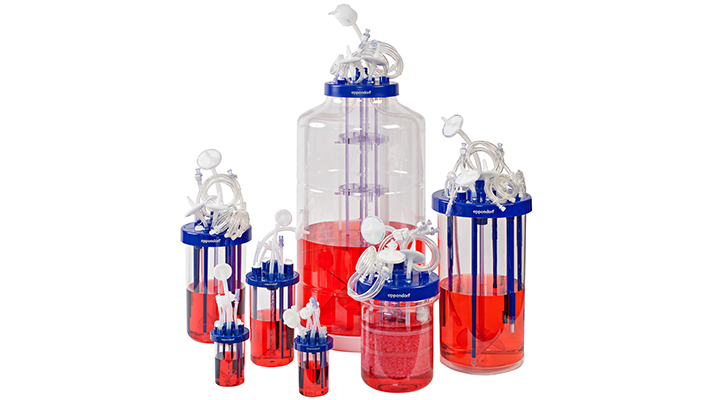
HNQ stands for Harmonized for Next-Generation Quality, and it reflects a fairly simple idea: every BioBLU HNQ product ships with a harmonised set of certificates and validation guide documentation, rather than leaving customers to assemble a quality package from scratch. In practice, that consistency is what actually saves time during equipment qualification and process validation.
Suitable for clinical and commercial manufacturing: each BioBLU HNQ single-use bioreactor comes with a lot-specific validation guide, an irradiation certificate, and a sterility and endotoxin test report, bundled together with the bioprocess controllers, SCADA software, and services needed to keep the overall system aligned with GMP requirements.
Eppendorf BioBLU benefits:
Cell and gene therapies are creating fundamentally different manufacturing requirements, particularly around contamination control, smaller batch sizes and sensitive cell cultures. How are these emerging modalities changing the design expectations for the next generation of single-use bioreactor systems?
Cell and gene therapy (CGT) manufacturing turns a lot of conventional bioprocessing logic on its head. Instead of prioritising massive scale-up, the emphasis shifts to high-containment, micro-scale precision for shear-sensitive primary cells and high-titre viral vectors. Next-generation single-use bioreactor (SUB) designs are responding on several fronts:
As single-use technologies move deeper into regulated commercial manufacturing, validation, documentation and data integrity are becoming as important as bioreactor performance itself. How is Eppendorf addressing these requirements through the BioBLU HNQ ecosystem and its integration with bioprocess control and software platforms?
Eppendorf has been a pioneer in single-use technology, and keeping pace with the regulatory standards that agencies continue to refine over time is built into how we design every system. Our bioprocess controllers run on DASware control plus SCADA software, developed for compatibility with 21 CFR Part 11 and EU GMP Annex 11.
Dasware Control Plus benefits at a glance:
Asian biomanufacturers range from emerging biotech companies building their first processes to established organisations expanding commercial capacity. How does Eppendorf see the balance between standardisation and flexibility evolving, and how can a scalable single-use platform support manufacturers at different stages of maturity?
Asian biomanufacturers sit at very different points in their growth journeys. Some are building their first process with lean teams and tight timelines; others are expanding established commercial operations and chasing greater efficiency at scale. In that environment, the conversation is no longer about choosing between standardisation and flexibility — it is about finding the right balance of both.
Standardisation brings structure. It simplifies training, improves reproducibility, supports smoother tech transfer, and creates a more reliable path from process development into manufacturing. That consistency becomes especially valuable as organisations grow and operations get more complex.
Flexibility, at the same time, remains essential. Different companies have different products, facility footprints, regulatory strategies, and capacity goals. A scalable single-use platform can support that diversity by giving manufacturers a consistent technical foundation while still leaving room to adapt as needs change.
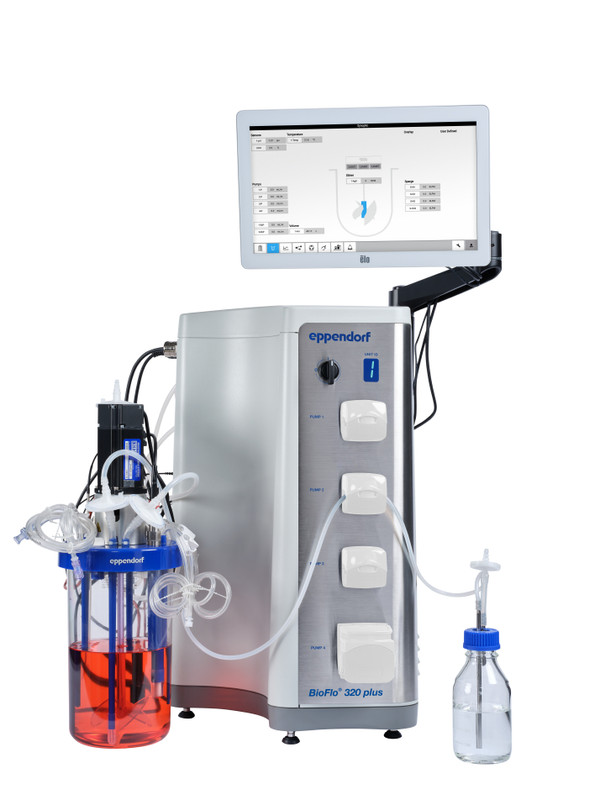
Eppendorf approaches this balance by combining standardisation with built-in flexibility. Platforms such as the BioFlo 320 Plus are designed to cover a wide working volume range, from around 420 mL up to 40 L, giving biomanufacturers room to move from early process development to larger-scale operations on a familiar system — which in turn lets teams scale with more confidence while maintaining process continuity.
Eppendorf also supports flexibility through system adaptability. The same parent platform can be configured for either glass or single-use vessels, making it easier for manufacturers to choose the setup that best fits their process, budget, and stage of growth. Beyond operational flexibility, that adaptability also makes capital investment decisions more practical — a real advantage for companies that want to grow without locking themselves into one rigid approach.
For earlier-stage companies, this means building robust processes without investing in heavily customised infrastructure from day one. For more mature organisations, it creates a practical route to add capacity and scale up while maintaining process continuity across stages.
In my view, the platforms that hold up best over time are the ones that combine standardisation with just enough flexibility to support growth, reduce risk during scale-up, and let manufacturers evolve with confidence.
Looking ahead over the next three to five years, where do you see the biggest opportunities for single-use bioprocessing in Asia, and what will ultimately determine whether these technologies become a mainstream foundation for commercial biologics and advanced therapy manufacturing?
Over the next three to five years, I expect the biggest opportunity for single-use bioprocessing in Asia to be helping manufacturers scale faster without adding unnecessary complexity. The region is seeing strong momentum across biologics, biosimilars, vaccines, and advanced therapies, and many companies need manufacturing solutions that are quicker to deploy, easier to operate, and flexible enough to grow with demand.
Single-use systems are well positioned for that. They reduce facility turnaround time, lower cleaning and validation demands, and give manufacturers more agility when moving from process development into clinical and commercial production. That is especially valuable in Asia, where the market spans both emerging biotech companies building their first manufacturing capabilities and larger organisations expanding regional or global supply.
For advanced therapies, the opportunity is even more significant, since these processes often call for smaller batches, high adaptability, and faster changeovers — exactly the operating model single-use technologies support well.
What will ultimately decide whether single-use becomes a true mainstream foundation is not the technology alone, but the confidence manufacturers have in using it at scale. That confidence will come from proven scalability, reliable supply, regulatory alignment, robust data integrity, and the ability to integrate into existing manufacturing strategies without disruption.
Adoption, in other words, will accelerate once manufacturers see single-use not just as a convenient option for development, but as a dependable long-term platform for commercial production. The companies that succeed will be the ones that combine flexibility, standardisation, and process confidence in a way that supports both growth and quality.


