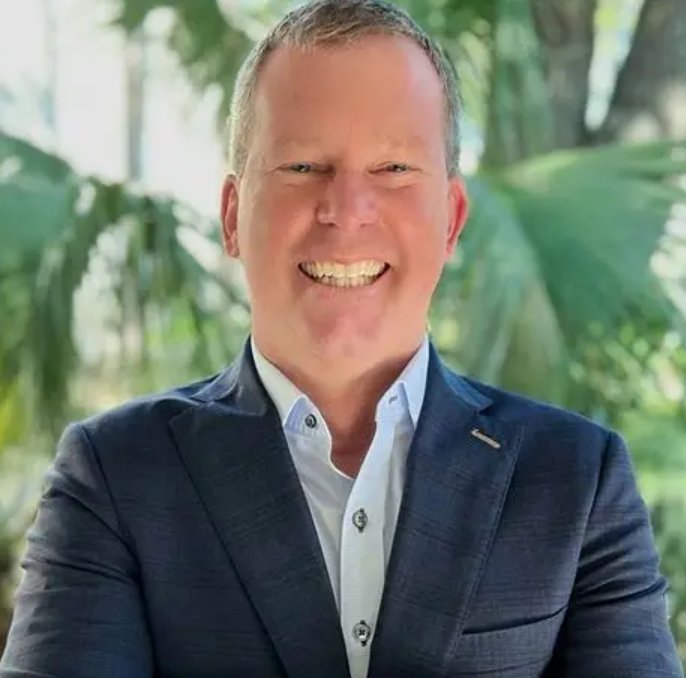
Dr. Peiqing Zhang, Scientific Director, Cytiva, :: Dr. Timothy Tan, Associate Professor and Leading Investigator, NTU's Oligo Foundry

Dr. Peiqing Zhang, Scientific Director, Cytiva (Left)
Dr. Timothy Tan, Associate Professor and Leading Investigator, NTU Oligo Foundry (Right)
Singapore's industry-academic collaborations are driving innovation in oligonucleotide therapeutics, with initiatives like the NTU Oligo Foundry bridging research and clinical translation. Singapore's Nanyang Technological University (NTU) has forged partnerships with industry experts to accelerate innovation, address practical challenges, and advance biopharma research in the region. Collaborations enhance capabilities, foster training, engagement, and create an environment of industry-centric innovation, positioning Singapore as a hub for nucleic acid therapeutics in the APAC biotech sector.
Collaboration with industry leaders, such as Cytiva, enhances capabilities through expertise in oligo technology and enables scalable and sustainable manufacturing, thereby improving the APAC biotech sector's competitiveness and addressing real-world challenges.
Dr. Peiqing Zhang, Scientific Director at Cytiva, and Dr. Timothy Tan, Associate Professor and Leading Investigator of NTU's Oligo Foundry, emphasize the pivotal role of academic-industry collaborations in advancing oligonucleotide therapeutics and fostering innovation in Singapore's biotech ecosystem.
Dr Timothy Tan: Academia-industry collaborations are absolutely critical in bridging what I call the "translation valley" in oligonucleotide therapeutics. In academic settings, we excel at fundamental discovery—identifying novel targets, developing new chemical modifications, and understanding mechanisms of action. However, the journey from a promising sequence on paper to a clinical candidate requires capabilities that traditionally lie outside academic expertise: scalable synthesis, rigorous analytical characterization, and manufacturing process development that meets regulatory standards.
Our collaboration with Cytiva illustrates how this gap can be effectively bridged. Access to industrial/scalable platforms like the Äkta Oligosynt and Äkta Pure systems has allowed us to move beyond proof-of-concept synthesis to actually understanding the manufacturing challenges early in our research pipeline. This is transformative—we're no longer just designing therapeutic oligonucleotides in isolation; we're designing them with manufacturability and scalability in mind from the outset.
Bidirectional knowledge transfer is one of the most powerful features of these innovation clusters. Industry partners gain insight into emerging therapeutic modalities and novel chemistries being developed in academic labs, while we gain practical understanding of CMC requirements, purification challenges, and quality control that would otherwise become apparent much later in the development process. Early integration significantly reduces translation risks.
From a broader perspective, academia-industry collaborations are reshaping the biotech landscape by accelerating the maturation of oligonucleotide therapeutics as a drug modality. We're seeing faster progression from academic discoveries to startup formation, more informed early-stage development, and ultimately, more oligonucleotide drugs reaching patients. This infrastructure and expertise-sharing creates a more robust ecosystem where academic innovation can more seamlessly transition into clinical and commercial reality.
Dr Peiqing Zhang: The majority of first-in-class and early oligonucleotide programs originate in academics or translational research centers. Without strong academia-industry partnerships, many of these promising ideas can never make it beyond the lab bench.
Oligonucleotide therapeutics, including ASOs and siRNAs, target specific genetic sequences to address disease at its root, offering a success rate six times higher than traditional drug development approaches. This is achieved through integrated capabilities spanning discovery, synthesis, purification, formulation, and quality control. However, research-stage synthesis and purification methods, while fast, are not scalable, posing regulatory risks during scale-up. Collaborations like the one with NTU aim to introduce scalable technologies early, ensuring consistency from research to manufacturing and enhancing Singapore’s biotech capabilities in oligonucleotide drug development and production.
Dr Timothy Tan: In oligonucleotide therapeutics, academic-industry collaborations are not merely important, they're essentially prerequisite for success in this field. The complexity of oligonucleotide drug development demands a level of integration between discovery science and manufacturing expertise that neither sector can achieve in isolation.
Let me put this in context: oligonucleotide therapeutics represent one of the most promising yet technically demanding drug modalities we have. We are dealing with molecules that are exquisitely sensitive to synthetic conditions, require highly specialized purification strategies, face unique delivery challenges, and must meet stringent regulatory requirements for chemistry, manufacturing, and controls. Academic labs can't match the decades of process development expertise in companies like Cytiva. Conversely, industry partners need the creative, high-risk fundamental research that happens in academic settings to identify the next generation of therapeutic targets and chemical innovations.
In Singapore specifically, these collaborations are playing a catalytic role in establishing a complete oligonucleotide therapeutics ecosystem. We're seeing a convergence of strengths: strong academic research institutions with expertise in RNA biology and medicinal chemistry, government agencies like NATi that understand the strategic importance of translational infrastructure, and industry partnerships that provide access to world-class technology platforms. This convergence is creating something quite rare—a regional environment where an oligonucleotide therapeutic concept can progress from initial target identification all the way through preclinical development without leaving the ecosystem.
Beyond Singapore, these collaborations are addressing real-world challenges that have historically limited oligonucleotide therapeutic development. First, the manufacturing cost barrier: By bringing industrial synthesis and purification platforms into academic settings early, we're identifying cost-effective process strategies during research rather than after significant investment has been made. Second, the analytical characterization challenge: Oligonucleotides require sophisticated analytical methods to assess purity, identity, and stability. Access to industrial instrumentation and expertise accelerates method development and ensures our preclinical candidates are being evaluated with the same rigor they'll face in clinical development. Third, the regulatory preparedness gap: Through these collaborations, academic researchers gain practical understanding of ICH guidelines, impurity specifications, and documentation requirements, which dramatically smooths the transition when these programs move toward IND-enabling studies.
Collaborations with translational infrastructure like the Oligo Foundry are transforming the commercialization landscape for oligonucleotide startups. By de-risking the manufacturing process—ensuring validated targets, established analytical methods, and a clear path to clinical supply—these collaborations accelerate fundraising and enhance partnerships with pharmaceutical companies.
The Oligo Foundry's collaborations drive a multiplier effect: each successful project validates the model, attracts industry interest, secures more investments, and trains scientists with hybrid expertise. This approach is building a sustainable oligonucleotide therapeutics industry in the region.
Dr Timothy Tan: The Oligo Foundry was conceived with a very specific mission: to function as a translational bridge where academic innovation meets industrial-scale reality. Unlike traditional academic labs that focus solely on discovery, or contract manufacturing organizations focused purely on production, the Oligo Foundry operates in that critical intermediate space—what I describe as the "developability assessment zone."
Our approach to scaling is fundamentally about de-risking translation. We work with emerging oligonucleotide modalities—whether they're novel antisense designs, siRNAs with new chemical modifications, or splice-switching oligonucleotides—and systematically evaluate them through the lens of manufacturability. Using Cytiva's Äkta platforms, process development can be performed at a scale that balances meaningful insights—such as identifying purification challenges, solubility issues, and stability concerns—with early-stage timing to guide molecular design decisions. This iterative process of synthesis, purification, characterization, and redesign accelerates the development of clinical candidates.
NATi has played a pivotal role in advancing oligonucleotide therapeutics by funding the development of translational infrastructure and expertise. Their support has enabled investments in industrial-grade equipment, training for scientists in both biology and process chemistry, and partnerships like the collaboration with Cytiva, which integrates cutting-edge manufacturing technology into academic settings.
NATi's support advances Singapore as a regional hub for oligonucleotide therapeutics by creating a unique ecosystem of academic research, translational infrastructure, and industry partnerships. It is building human capital by training versatile scientists and positioning Singapore as a leader in oligonucleotide process development, attracting investments and scale-up, spurring global collaborations and establishing the region as a key player in the global oligotherapeutics landscape.
The Oligo Foundry isn't just about our specific research projects—it's about creating a replicable model for how academic-industry collaboration can accelerate an entire therapeutic modality, and demonstrating that this model can thrive in Singapore's innovation ecosystem.
Dr Peiqing Zhang: Initiatives like the NTU Oligo Foundry demonstrate the power of collaboration, speed, and focus in advancing oligonucleotide therapeutics. By combining cutting-edge science with practical technology development, they aim to transform experimental concepts into tangible outcomes, including potential drug candidates.
The Foundry emphasizes rapid technology implementation and asset translation, which is critical because APAC already accounts for over 30% of global pipelines for genomic medicines, including oligonucleotides. Singapore and several other APAC countries have strong basic and translational research and a growing biotech start-up community. The challenge isn’t generating discoveries; it’s scaling them into therapies that reach patients.
Ecosystem-level partnerships, like the collaboration between Cytiva and NTU Oligo Foundry, bridge the gap between research and drug development. Cytiva provides advanced technology, expertise, and workflow support, while the researchers at NTU Foundry contribute biological insights, including the siRNA. Together, they created a high-performance workflow for scalable and consistent siRNA production, achieving high yield, purity, and bioactivity, setting the stage for further oligonucleotide development.
Cytiva views the NATi Oligo Foundry as a model for accelerating therapeutic development through collaboration. By fostering partnerships and focusing on translating science into therapies that address unmet medical needs, we aim to enhance APAC's role in the global biotech industry and drive economic impact through speed and innovation.
Dr Peiqing Zhang: Cytiva's 40 years of expertise in oligonucleotide synthesis have positioned it as a global leader, enabling developers to advance products from concept to commercialization. This experience is crucial for building robust, scalable solutions and driving innovation in oligonucleotide therapeutics.
The NTU Oligo Foundry integrates a complete workflow, from synthesis to purification, tailored to current needs but scalable for future GMP production. Supported by Cytiva's experienced team in Singapore and global network of oligo experts, the collaboration optimized workflows and overcame challenges, accelerating platform development.
Researchers in Singapore now have access to a robust platform at the NTU Oligo Foundry for synthesizing and purifying oligo candidates for preclinical evaluation. This scalable, quality-assured system aligns with industry standards, ensuring smooth transitions to large-scale production.
Therapeutic modalities are increasingly converging, with combinations of molecule types and delivery systems enhancing specificity and efficacy. In oligonucleotide research, advancements include pairing oligos with lipid nanoparticles (LNPs), creating antibody-oligonucleotide conjugates (AOCs), and combining oligos for gene editing with mRNAs encoding enzymes like Cas9. Cytiva's diverse technology portfolio, covering antibodies, viral vectors, cell therapies, mRNAs, oligos, and LNPs, provides collaborators with a comprehensive toolkit to explore multiple pathways for drug development.
Dr Timothy Tan: Historically, oligonucleotide therapeutics development has been concentrated in North America and Europe, where decades of expertise in process development, regulatory navigation, and clinical translation have been established. The Oligo Foundry has shown that strategic technology partnerships and focused capability-building can enable Asia-Pacific institutions to operate at the same technological frontier.
NTU Oligo Foundry has now enabled Asia-Pacific institutions to actively test and optimize workflows for novel oligonucleotide modalities, pushing the limits of current synthesis and purification methods. By addressing challenges like complex sequences and emerging chemistries, the region is not just adopting technology but contributing valuable knowledge to the global oligonucleotide manufacturing landscape.
These coordinated efforts are likely to have a significant impact on the APAC regional prospects.
Asia-Pacific is evolving from being merely a clinical trial site to becoming a hub for oligonucleotide therapeutics discovery, development, manufacturing and commercialisation. The Oligo Foundry's collaboration with Cytiva demonstrates that this transition is underway. Now, it is imperative for Asia-Pacific to scale infrastructure, industry partnerships, in addition to government support needed to bridge the translational gap and sustain momentum.