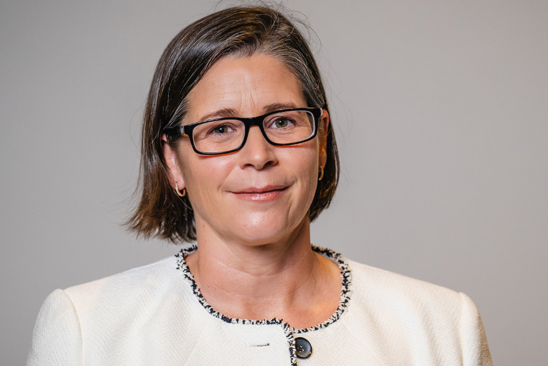
It has been over a year since you took on the role of CEO at AusBiotech. What have been your key priorities so far, and what further goals or initiatives do you envision for the organisation in the coming years?
It was an honour to step into the CEO role at AusBiotech in 2024, knowing that I was joining an organisation with an almost 40-year history of serving and growing Australia’s life sciences sector.
My priorities upon joining were to engage with our broad member base, hear their voices on key topics and consult across our range of national and international stakeholders, from government to the investment community and beyond.
Australia’s life sciences sector is in a growth phase. It has doubled its size since 2017 and today, there are more than 1,600 biotechnology and medical technology companies operating here, within a broader life sciences ecosystem of over 2,900 organisations.
What struck me when I first began engaging across the breadth of our sector continues to drive our strategy forward today. Australia has a wide and proud history in medical research, fantastic early-phase research and development capability including in our Contract Research Organisation (CRO) and Contract Development and Manufacturing Organisation (CDMO) environment, and a strong startup ecosystem, which is generally well understood. But what is less understood is the growing cohort of Australian scale-up life sciences companies that are now trading across the world.
As Australia’s life sciences sector continues to grow, we have an opportunity to help even more of our exciting scale-up companies to continue their global trajectory. That’s a sector shift we’re discussing with our wide breadth of stakeholders including government and the investment community.
How does AusBiotech’s role evolve in helping bridge academia, startups, and industry within Australia and globally?
For nearly 40 years, AusBiotech has advocated for growth across the breadth of Australia’s life sciences sector — from research and translation through to startups, scale-ups and established companies. As the world changes and our sector expands, our role is more important than ever.
As a peak body for the life sciences, our membership spans the entire pipeline: universities and research institutes, startups and scale-ups, large Australian and global companies, CROs, CDMOs, and the broader service provider community. This breadth gives us a unique national vantage point to understand the sector’s needs and to support our members as they translate Australian health and medical research into future healthcare innovations.
The broad convening power of our membership and our deep sector history mean that we can act as a super connector for our sector. Each year we bring together more than 8,000 people through our events portfolio, including Australia’s Biggest Week in Biotech with its two flagship events, AusBiotech Invest and the AusBiotech International Conference, as well as our medtech conferences AusMedtech and AusMedtech Invest.
We also convene a broad cross-section of the sector for wide ranging discussions with the government. This year alone we have hosted roundtables with members and representatives from a range of government departments from Health to Industry, Foreign Affairs, Trade, Agriculture and others.
As we continue to grow our convening capability we are focused on areas related to government and industry partnership to inform good policy development, trade, investment and industry knowledge-sharing.
Australia has made great strides in mRNA, cell and gene therapy, and radiopharmaceuticals. Which other sectors do you see as emerging or gaining momentum within the country’s biotech landscape?
Beyond mRNA, cell and gene therapy, and radiopharmaceuticals, we’re seeing strong momentum in several areas. Genome and genetic sequencing and analysis are advancing rapidly, underpinning more precise diagnostics and personalised therapies.
Vaccines and broader medical countermeasures remain a core national strength, supported by Australia’s strong clinical trials and research base. Regenerative medicines and microbiome health are also emerging as exciting frontiers, with Australian companies and researchers pushing into new therapeutic approaches.
Alongside this, high value medtech capability remains a strength while our digital health ecosystem continues to gain momentum.
Australia has a strong research base, but we haven’t seen many companies scale globally to the level of CSL. While the government has introduced several initiatives to address this gap, what more do you think is needed to help Australian biotech firms grow into globally competitive enterprises?
In a world where countries are increasingly focused on building and attracting life sciences capability, a strong partnership between government and industry is critical to ensure Australian health innovation can play the role it should in the future health and wealth of our nation.
It’s important to recognise that Australia does have a growing cohort of globally competitive scale-up and larger biotech and medtech companies. Many are headquartered in Australia, conducting R&D and manufacturing domestically while successfully exporting to international markets.
Radiopharmaceutical leader Telix is a great example. Others include Orthocell — exporting regenerative medicine products; BiomeBank — manufacturing microbiome-based therapies; AdvanCell — developing targeted alpha therapies for cancer; and Navbit — advancing surgical technology. And there are many more. These companies demonstrate that Australian life sciences innovation has the capability to scale up and compete globally.
As the Australian sector grows, we need the Australian Government’s policy agenda to mature with it. At AusBiotech we have mapped Australia’s policy ecosystem, listened to our sector, convened our members, and partnered with our sector peers to form four unified tasks to the Australian Government:
AusBiotech has launched several partnerships and MoUs in recent years to strengthen collaboration across the biotech ecosystem. Could you share some of the key outcomes from these initiatives and how they are helping advance Australia’s biotechnology sector?
As a national peak body, we are committed to supporting a connected ecosystem here in Australia and deeper collaboration with our international peers.
Over the past 12 months, we have signed seven MOUs with Australian based ecosystem partners and international partners.
In Australia, those MOUs have focused on building foundations for improved knowledge-sharing across areas of shared interest and creating forums for industry-to-industry collaboration on shared advocacy goals as we built out a more robust government and policy agenda.
Looking at our international collaborations, AusBiotech and the UK BioIndustry Association signed an MOU focused on enhancing policy alignment and fostering deeper industry collaboration, and with Taiwan BIO to enhance collaboration between the Asia-Pacific biotech hubs. In 2024 we also signed an MOU with the Korean Health Industry Development Institute, establishing a framework for collaboration and cooperation that will support the growing biotechnology industry in Australia and Korea.
In your view, what are the most significant opportunities (and risks) for Australia’s biotech ecosystem over the next 3–5 years?
Over the next three to five years, Australia’s biotech and life sciences ecosystem has an extraordinary opportunity to harness its world-class strengths across the entire pipeline from discovery to development to contribute to global health and wellbeing.
As the world continues to face increasing health challenges associated with rise rates of chronic disease, ageing populations and climate related health challenges Australia can play an important role as both a high quality and stable health research and development partner, as well as hotbed of scale-up company potential.
Our focus is on ensuring the Australian ecosystem remains globally connected, and that we are working hand in glove with our partners in the Australian government to harness the full suite of our life sciences capability —for the health and wealth of our nation, and for the health of people everywhere.
As the conference brings together leaders from across research, industry, and investment, what key message or takeaway would you like participants to leave with about the future direction of Australia’s biotech sector?
One of the strongest takeaways from this year’s AusBiotech International Conference was just how much international attention Australia is now attracting — not just for the quality of its sciences but for the potential of its ecosystem as a stable partner of choice.
The key message delegates left with is that the future for Australian biotech is bright, ambitious and increasingly global — and that our annual AusBiotech International Conference will continue to grow each year into a focal point for international engagement and collaboration. AusBiotech 2026 will be held on the Gold Coast from October 20 – 23, we’re looking forward to welcoming the breadth of Australia’s life sciences sector and international partners there.
Looking at the future of AusBiotech, what are the priorities on your agenda for the coming years?
We understand the deep potential that Australia’s life sciences sector holds as part of Australia’s diversified future economy and we understand that the success of our members is tied to the future health and wealth of our nation. As more Australian life sciences companies continue to get traction and reach scale-up phase, we want to ensure the wider ecosystem is well placed to support their growth.
To that end we’re focused across five key strategic areas: being a sophisticated partner to government with high quality sector wide advocacy, enabling connection and knowledge sharing across our sector, engaging the wide investment community to support their interest in Australian life sciences, and growing our global trade capability in new ways.
Ensuring that Australia, as a stable, mature market with great capability throughout the life sciences value chain, can thrive in this changing world is of critical importance to our sector and our country. If we meet our goals, we will be able to maximise the opportunity that comes with a growing number of Australian life sciences companies scaling and partnering globally.
Ayesha Siddiqui