Digital Manufacturing Must Lead The Next Phase Of Cell And Gene Therapy Scale Up
March 12, 2026 | Thursday | News | By Ankit Kankar | ankit.kankar@mmactiv.com
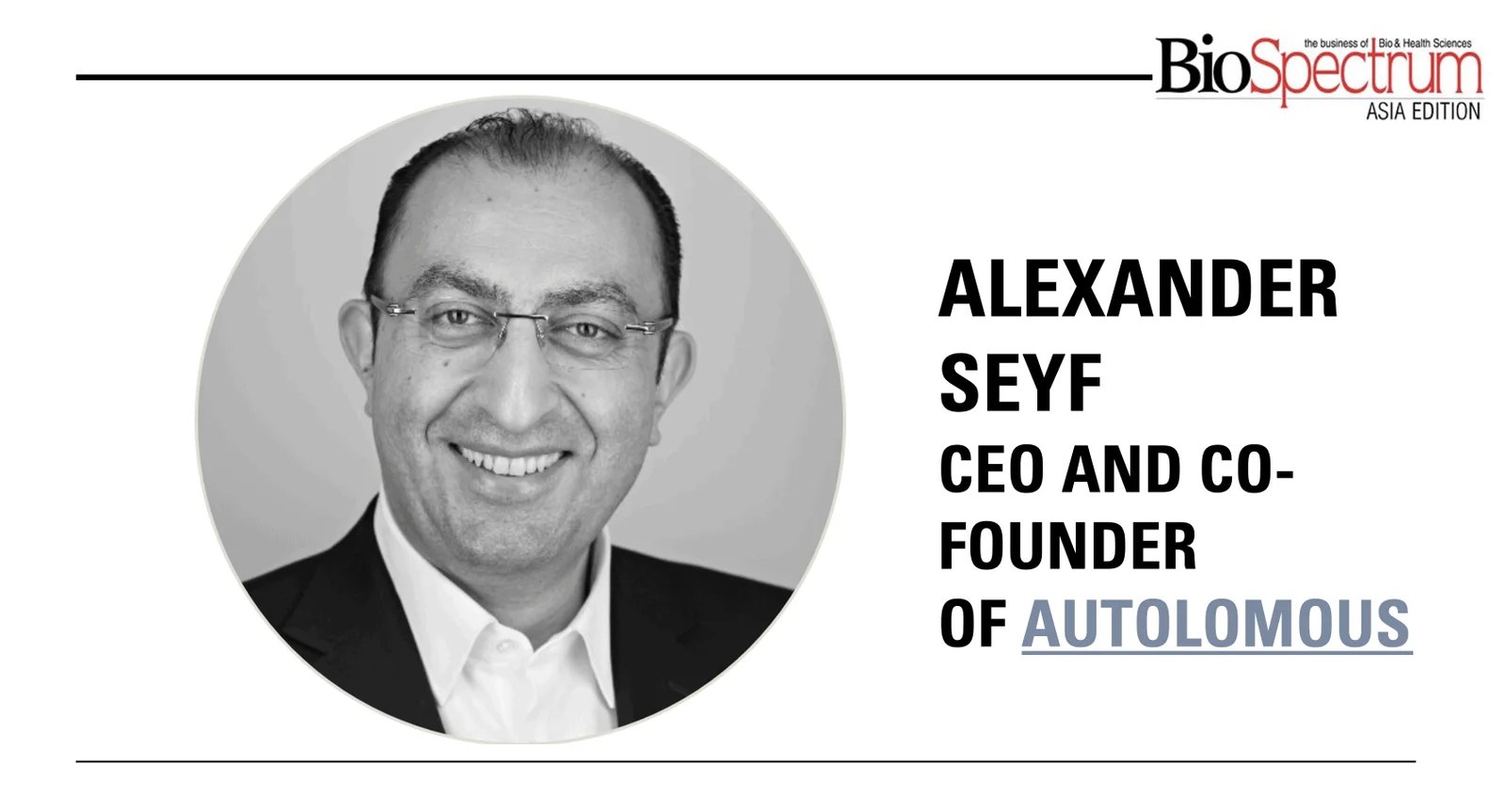
Autolomous CEO Alexander Seyf Explains How Automation And GMP Aligned Digital Platforms Can Remove Manufacturing Bottlenecks And Strengthen The United Kingdom’s Global Leadership In Advanced Therapy Production
In conversation with Ankit Kankar, General Manager at BioSpectrum Asia, Alexander Seyf, CEO and co founder of Autolomous, discusses the operational constraints currently limiting the scale of the United Kingdom’s cell and gene therapy sector. He highlights how manual processes, fragmented data systems, and facility constraints continue to slow the transition from clinical development to commercial manufacturing. Seyf also outlines how GMP aligned digital manufacturing platforms can enhance data integrity, reduce batch failure, accelerate regulatory review, and position the UK as a global leader in digitally orchestrated bio manufacturing
What are the primary operational and manufacturing bottlenecks currently limiting scale in the UK’s CGT sector?
The UK’s CGT sector is currently hitting a "scalability ceiling." While we have been incredibly successful at moving therapies through Phase I and II trials, the transition to late-stage clinical and commercial manufacturing reveals deep-seated bottlenecks.
The most prominent bottleneck is manual dependency and process fragmentation. Too many of our processes are still "open" and heavily reliant on human intervention. In autologous therapies, where the patient is the starting material, every batch is a unique production run. Analogue record-keeping and manual entry protocols create a massive "burden of proof" for Quality Assurance (QA). When you are scaling to hundreds or thousands of patients, the sheer volume of paper documentation becomes a physical and regulatory liability, leading to a "batch release lag" that can keep life-saving treatments sitting in a freezer instead of reaching patients.
Furthermore, we face a facility utilisation crisis. High-grade cleanroom space is expensive and finite. As many current processes are manual and open, they require high-level environments to mitigate contamination risks. This limits the number of batches that can be produced simultaneously. Without moving toward closed, automated, and digitally orchestrated systems, we cannot achieve the "parallel manufacturing" necessary to lower costs and increase throughput.
Finally, the talent gap remains a significant hurdle. We are not just lacking scientists, we are lacking "bioprocessing engineers" and digital-native operators who understand both the biology of the cell and the logic of the digital systems required to manage them.
How can GMP aligned digital platforms reduce batch failure, improve data integrity, and enhance regulatory readiness in advanced therapy manufacturing?
At Autolomous, we view digitalisation as the foundational infrastructure for modern medicine. Implementing GMP-aligned digital platforms such as autoloMATE can serve three vital functions:
- Reducing batch failure: Human error remains the leading cause of batch deviations and failures. Digital platforms like autoloMATE enforce "right-first-time" manufacturing. By providing digital work instructions and real-time validation, we can prevent an operator from using an expired reagent or skipping a critical incubation step. If a deviation occurs, the system flags it immediately, allowing for proactive intervention rather than post-hoc discovery.
- Improving data integrity: In the eyes of a regulator, if it isn't documented, it didn't happen. Paper records are prone to loss, transcription errors, and "data silos." A digital platform ensures data provenance, an immutable trail of who did what, when, and with which materials. This "ledger" approach ensures that data is captured at the point of origin, eliminating the risks associated with manual back-filling of records.
- Enhancing regulatory readiness: Digitalisation transforms the 'Batch Record Review' from a multi-week forensic investigation into a streamlined, exception-based process. While digital platforms offer significant advantages, ensuring compliance with evolving regulations and validation standards is critical for successful adoption and Trust.
What distinguishes the UK ecosystem today from competing CGT hubs in the United States, Europe, and Asia?
The UK’s integrated infrastructure and regulatory agility should inspire confidence and pride among stakeholders, highlighting our unique ecosystem that supports innovation and growth in CGT manufacturing.
The Cell and Gene Therapy Catapult is a jewel in our crown. It provides a de-risked environment where developers can bridge the gap between academic research and industrial-scale manufacturing. This level of state-supported, centralised expertise is something our European and American counterparts often struggle to replicate with the same cohesion.
Furthermore, the UK Medicines and Healthcare products Regulatory Agency (MHRA) has historically been a forward-thinking partner. The UK has a "pro-innovation" regulatory culture that understands the nuances of advanced therapies. Our ability to pilot new manufacturing models - such as decentralised or point-of-care manufacturing - within a clear regulatory framework gives us a first-mover advantage.
However, we must be wary. The US is doubling down on "bio-automation," and Europe is leveraging its massive traditional pharma footprint. To remain distinct, the UK must be the leader in digital bio-manufacturing.
Can you provide case examples or quantified outcomes demonstrating how digital manufacturing tools have improved efficiency, cost control, or time to commercialisation?
Through our long-standing partnership with the CGT Catapult, we have demonstrated the tangible impact of transitioning from paper-based to GMP-compliant digital processes.
Our partnership with the CGT Catapult demonstrates how digital manufacturing tools can inspire optimism by delivering measurable improvements, such as a 65% reduction in QA review time, making the sector more efficient and promising.
Furthermore, we achieved a 40% reduction in manual data entry. The automation of the flow of data from equipment directly into the electronic batch record (eBR) reduces the data entry error rate to close to zero. These aren't just "efficiency gains"; they are fundamental shifts in the cost-of-goods (COGS) model. When you reduce the labour burden and the risk of failure, you create a direct path to commercial viability and broader patient access.
How does digital infrastructure influence investor confidence and long-term capital allocation within the CGT landscape?
Investors today are becoming increasingly "manufacturing-savvy." In the early days of CGT, capital flowed toward scientific breakthroughs. Today, investors are looking for de-risked execution. Digital infrastructure is a primary indicator of a company’s maturity. An asset with a robust digital manufacturing strategy is viewed as more "investable" because it has a clear path to scale. It provides investors with transparency. If a company can show real-time data on process yields, batch success rates, and supply chain integrity, it builds a level of trust that paper-based companies simply cannot match.
Furthermore, digital systems facilitate comparability. As a therapy moves from Phase II to Phase III, or from one manufacturing site to another, digital records provide the "fingerprint" needed to prove to regulators (and investors) that the product remains the same. In a constrained capital environment, the companies that win will be those that can prove they can manufacture their therapy reliably, repeatedly, and at a sustainable margin.
From Alexander’s perspective, what must the UK prioritise over the next three to five years to secure its position as a global leader in scalable cell and gene therapy manufacturing?
To secure its position as a global leader by 2030, the UK must prioritise three pillars:
- Mandatory digitalisation and standardisation: We must move away from bespoke, "homegrown" manual systems. The UK government and industry bodies should incentivise the adoption of interoperable digital standards. We need a "common language" for CGT data to ensure that different pieces of equipment and software can communicate.
- Investment in "plug-and-play" Infrastructure:We need to expand our "Manufacturing Innovation Centres" to include virtualised training environments. This is imperative as it will allow us to train the next generation of operators faster and allow developers to "stress-test" their manufacturing processes in a virtual environment before a single cell is processed.
- Global "data-sharing" leadership: The UK should lead the way in creating pre-competitive data consortia. By sharing anonymised manufacturing data (with the help of AI and privacy-preserving technologies), we can collectively identify why certain batches fail and how to optimise yields.