SingHealth Duke-NUS Launches Two New Global Health Centres to Advance Allied Health and Pharmacy Practices in Asia
November 5, 2025 | Wednesday | News
• The Centre for Global Allied Health and Centre for Global Pharmacy will advance global health collaboration and capacity building, with a focus on strengthening allied health and pharmacy practices across Asia.
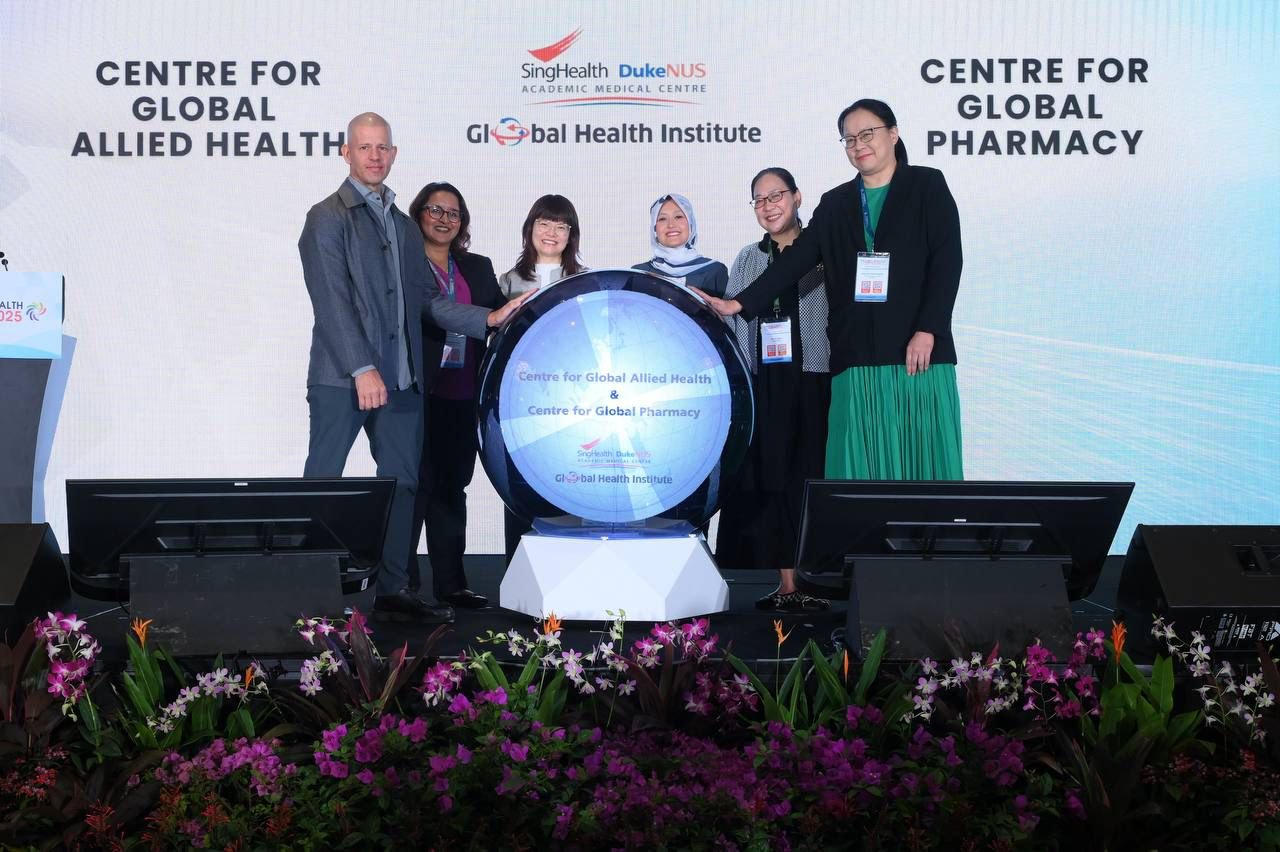
The SingHealth Duke-NUS Academic Medical Centre today announced the establishment of two new centres — the Centre for Global Allied Health and the Centre for Global Pharmacy — under the auspices of the SingHealth Duke-NUS Global Health Institute (SDGHI). These new enabling platforms will advance global health collaboration and capacity building, with a focus on strengthening allied health and pharmacy practices regionally across Asia. The announcement was made at the Singapore Allied Health Conference 2025 held at Fairmont Singapore, which features distinguished speakers from local and overseas institutions to ignite learning and knowledge exchange for allied health practitioners.
Building on the combined strengths of SingHealth, Singapore’s largest public health cluster, and Duke-NUS Medical School, Singapore’s premier graduate-entry medical school, SDGHI was established in 2018 to coordinate and scale global health efforts. With the addition of these centres, SingHealth and Duke-NUS reaffirm their commitment to advancing cross-border health equity.
The two new centres come at a critical time when demand for specialised allied health and pharmacy expertise is rising across Asia in response to rapid technological advancements, ageing populations, and the growing prevalence of chronic diseases.
- WHO estimates a projected shortfall of 11 million health workers by 2030, predominantly in low- and lower‑middle‑income countries (Word Health Organization Health Workforce Overview). For pharmacists alone, the shortage is projected to be over 190,000 globally by 2030 (The Global Health Workforce Stock and Distribution in 2020 and 2030: A Threat to Equity and ‘Universal’ Health Coverage, June 2022)
- By 2035, ASEAN will have nearly 127 million people aged 60 and above (Source: Old Age Poverty and Active Ageing in ASEAN, The ASEAN Secretariat, December 2023) whilst Asia overall will see the number of older persons (60+) nearly double from 670 million in 2022 to 1.3 billion by 2050 (Asia-Pacific Report on Population Ageing 2022, United Nations Economic and Social Commission for Asia and the Pacific, November 2024).
- Non-communicable diseases (NCDs) currently account for 75% of global deaths (Noncommunicable diseases, WHO, 23 December 2024). In South-East Asia, the number of people living with diabetes, for example, is projected to rise to 185 million by 2050, with an estimated 43% undiagnosed (Diabetes in South-East Asia in 2024, International Diabetes Federation).
At the same time, a younger healthcare workforce is eager for international collaboration, leadership development and global health opportunities, underscoring the timeliness of these new centres.